

This blog may contain AI generated or assisted images.
Every Roll Counts: The Complete Guide to Queer Representation in Tabletop Gaming
The dice are rolling, the cards are shuffling, and the tabletop has never been gayer. We are living through a golden age of queer representation in gaming, and if you have not noticed, you have not been rolling enough. Roughly 17 percent of active gamers now identify as LGBTQ+, according to 2025 GLAAD data. That is not a niche market. That is a revolution with a rulebook. From the deepest dungeons of Golarion to the glittering pride sleeves at your local Friday Night Magic, queer players are not just welcome at the table. We are building the table, designing the cards, and writing the lore that future players will grow up on. This is the definitive map of queer tabletop. Consider it your invitation to pull up a chair, pour something strong, and get comfortable. We have stories to tell, dice to roll, and absolutely no time for straightsplaining.
The Worlds We Build: TTRPGs
Tabletop roleplaying games are where queer imagination runs wildest. There are no cameras, no focus groups, no shareholders nervously pacing outside the writer's room. Just a group of friends, a stack of character sheets, and the radical possibility that you can be anyone you want to be. For decades, TTRPGs have served as covert laboratories for gender exploration, found family, and narratives that center the marginalized. Today, that subtext has become text. The biggest names in the industry are finally catching up to what queer players have always known. The dice do not care who you love.
Dungeons & Dragons
Let us start with the giant whose shadow stretches across every gaming store in America. Dungeons & Dragons has come a long way from the rigid gender assumptions of early editions. The 2014 Player's Handbook explicitly told players their character's gender need not be confined to binary notions, and that orientation is for you to decide. Lead designer Jeremy Crawford committed in 2017 to routinely including LGBTQ+ characters in official material. Corellon Larethian, the elven deity, has been written as beyond the binary since the 1980s. Fala Lefaliir, the nonbinary herbalist in Waterdeep: Dragon Heist, tends their shop with the same quiet confidence they bring to their identity. Strahd von Zarovich is canonically bisexual in Curse of Strahd, because of course the ultimate gothic villain swings both ways. Doric, read by many fans as aro and ace, stole scenes in the Honor Among Thieves film with a smirk that suggested she had better things to do than flirt with danger. We have a full guide to LGBTQ+ characters in D&D if you want to go deeper. Think of this as the appetizer before the feast.
Pathfinder and Paizo
Now let us talk about the studio that was doing this before it was trendy. Paizo built queer and trans representation into Pathfinder early and organically, ahead of most mainstream RPGs. While other companies were still treating inclusion like a risky marketing move, Paizo was writing trans women into the core iconics and making nonbinary deities part of the official pantheon.
Meet Shardra Geltl, the iconic dwarven shaman and one of the first trans iconic characters in a major D&D-style game. She is not a side quest. She is not a tragic backstory buried in an appendix. She is a core iconic, as fundamental to the brand as any sword-swinging fighter or fireball-tossing wizard. Then there is Anevia Tirabade, a trans lesbian woman married to the paladin Irabeth Tirabade in Wrath of the Righteous. Their marriage is not hidden in a footnote or coded between the lines. It is part of the central narrative, a love story forged in the middle of a demon war. If that is not heroic, nothing is.
Paizo did not stop at characters. They built queerness into the divine itself. Arshea is a nonbinary deity of freedom, physical beauty, and sexuality. Their worship is not fringe or heretical. It is canonical, celebrated, and woven into the setting's religion. More recently, Mios Uriev joined the roster as the nonbinary iconic thaumaturge, proving that Paizo is still expanding who gets to be the face of fantasy. The company publicly celebrates Trans Day of Visibility and Pride on its blog every year, not because an intern scheduled a social post, but because the people writing these books live these lives. Pathfinder is not just queer-friendly. It is queer-founded, queer-written, and queer-loved by a community that knows the difference between performative allyship and real representation.
Vampire: The Masquerade and World of Darkness
If D&D is the bright fantasy of heroism and Pathfinder is the crunchy tactical epic, then Vampire: The Masquerade and the broader World of Darkness are the gothic mirror where hidden desire finally gets to stare back. White Wolf wrote queer characters and themes into these games from the early 1990s, when almost no other RPG dared to touch the subject. Vampirism worked as a metaphor for queer otherness, hidden desire, and found family. The games offered an unprecedented range of sexual and romantic options for the era, letting players explore identities that the real world was not ready to name.
Modern actual-play series like LA By Night and NY By Night feature openly bi, trans, and nonbinary Kindred who rule their cities with charisma and claws. The community around these games has always understood that the Masquerade is not just about hiding from mortals. It is about hiding from a society that fears what it cannot control. And queer players have been decoding that metaphor since the first edition hit shelves.
We would be doing you a disservice if we glossed over the low point. In 2018, the V5 Camarilla book drew serious backlash for a passage referencing the real persecution of LGBTQ+ people in Chechnya. It was clumsy, harmful, and rightly condemned. Publisher Paradox Interactive pulled the passage, apologized, and restructured the studio. The line came back stronger and more openly queer, with a commitment to doing better rather than burying the mistake. That honesty matters. Queer fans do not demand perfection. We demand accountability. And World of Darkness has shown it is willing to grow, listen, and keep the night alive for everyone who needs it.
Trading Card Games
Card games might seem like a harder space for representation. After all, how much story can you fit on a two-inch piece of cardboard? Turns out, quite a lot. TCGs have become stealth vehicles for queer narratives, slipping complex characters into competitive formats where players duel with the identities they love.
Magic: The Gathering
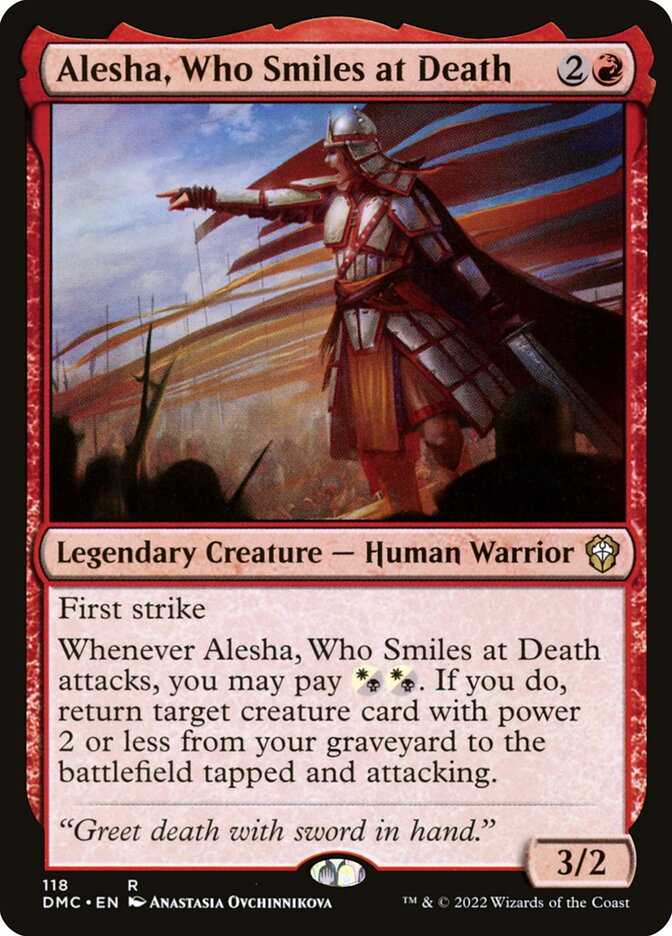
Magic: The Gathering has dozens of confirmed LGBTQ+ characters; community trackers count more than fifty. Alesha Who Smiles at Death became the first openly trans character in 2015. Niko Aris arrived as the first nonbinary planeswalker in 2021. Wizards even printed the Secret Lair: Pride Across the Multiverse set, putting rainbows directly into players' hands. That is just the surface. For the full deep dive into queer planeswalkers, legendary creatures, and the multiverse of representation, check out our dedicated MTG pillar.
Pokémon and the Eevee Phenomenon
Now for something completely different, and arguably just as magical. Pokémon might not be the first franchise you associate with queer tabletop culture, but the fandom has claimed it with glittering enthusiasm. Specifically, Eevee and its Eeveelutions have been embraced as queer and especially trans icons. The whole gimmick, one creature that can evolve into many different beautiful forms, reads as a near-perfect metaphor for self-discovery and becoming who you are meant to be. Sylveon's pastel palette echoes the trans pride flag so closely that it feels intentional even when it is not. There is a whole community meme called the Eevee gender system, where fans map their identities onto the various evolutions. This is fan-driven cultural reclamation more than official text, and that is exactly what makes it powerful. When a community takes something sweet and turns it into a symbol of survival and joy, nobody can copyright that feeling.
Board Games That Tell Queer Stories
Board games have a reputation for being the most mainstream corner of the tabletop family. You know the ones. Monopoly, Catan, the games your aunt pulls out at Thanksgiving. But a new wave of designers is using cardboard and meeples to tell explicitly queer stories, and the results are stunning.
Molly House
Molly House, from Wehrlegig Games and designers Jo Kelly and Cole Wehrle, is a game of queer joy and betrayal set in the clandestine molly houses of 1720s London. Inspired by the real history of Mother Clap's establishment, players host secret gatherings and risk exposure by the Society for the Reformation of Manners. It is tense, it is tender, and it refuses to let history erase the people who built these spaces. The game has been recognized by the American Tabletop Awards and Games for Change circles, and it deserves every bit of that acclaim. Molly House does not just teach queer history. It makes you feel the weight of hiding, the thrill of community, and the sting of betrayal. That is a lot to ask of cardboard, and it delivers.

Fog of Love and Love Is for Everyone
Fog of Love is a board game about romantic comedy, relationships, and the messy negotiation of two people trying to make it work. The base game was already charming, but the Love is for Everyone expansion, developed with designer Nikki Valens, pushed it into essential territory. Valens, a queer trans designer known for her work on Eldritch Horror and Mansions of Madness, brought her lived experience to the table. The base game's romance mechanics were made more inclusive with her input, and the expansion centers queer relationships without making them the punchline or the problem. It is just love. Complicated, funny, sometimes heartbreaking love. Exactly like the real thing.

Stonewall Uprising and The Sacred Band
Then there are the games that turn history into mechanics. Stonewall Uprising and The Sacred Band, both by designer Taylor Shuss, make queer history playable in the most literal sense. Stonewall Uprising is a deck-builder about the LGBTQ+ civil rights movement, letting players strategize through the events that shaped modern pride. The Sacred Band takes its name from the legendary Sacred Band of Thebes, an ancient military unit composed of warrior couples. These games do not shy away from the fact that queer people have always fought, loved, and organized. They put that truth on the table, shuffle the deck, and ask you to play your part.
The Indie Engine: Queer-Owned Studios
If the mainstream giants are finally opening the door, the indie studios kicked it off its hinges years ago. This is where the real heat lives. Queer-owned studios are not waiting for permission to tell queer stories. They are building new systems, new mechanics, and new worlds where straight is not the default setting. It is just one option among many, and usually not the most interesting one.
Possum Creek Games
Possum Creek Games, founded by designer Jay Dragon, is a studio that understands tenderness as a design philosophy. Their catalog reads like a love letter to the soft parts of being alive. Wanderhome is a pastoral fantasy about traveling animal-folk, gentle and genderless by default, built on the GM-less Belonging Outside Belonging engine. It was a Gayming Award finalist, and it plays like a warm breeze through tall grass. Sleepaway flips the tone to horror, casting players as queer summer-camp counselors protecting their kids from something strange in the woods. The queerness is not the horror. The horror is the horror. And the queerness is the resilience that keeps the lights on. Yazeba's Bed & Breakfast offers whimsical slice-of-life storytelling about a witch's B&B and its found family of guests. Every game in the Possum Creek library asks the same question. What if we built a world where you were already home?

Buried Without Ceremony
Buried Without Ceremony is the imprint of designer Avery Alder, and her work has fundamentally changed how tabletop thinks about identity and mechanics. Monsterhearts is the teen-monster messy-desire game that bakes fluid attraction directly into the system. The turn someone on move never asks about labels. It just asks what you want, who you want, and how messy you are willing to get. It is brilliant, horny, and painfully accurate to the experience of being a queer teenager who feels like a monster. Dream Askew is set in a queer enclave after societal collapse, and it pioneered the no-dice, no-GM Belonging Outside Belonging system that has since influenced an entire generation of indie designers. Alder does not put queer characters into traditional frameworks. She builds new frameworks where queerness is the architecture.

Evil Hat Productions
Evil Hat Productions is a major indie publisher that has put its money where its mouth is, backing explicitly queer games with real production values and serious marketing muscle. Their standout is Thirsty Sword Lesbians by April Kit Walsh. Released in 2021, it swept the ENNIE Awards and won a Nebula for Game Writing. The premise is simple and perfect. A sword duel can end in a kiss. The game celebrates queer joy, melodrama, and flirtation without apology, and it has become a gateway drug for players who never realized TTRPGs could be this gay. Evil Hat also publishes Girl by Moonlight by Andrew Gillis, a magical-girl game of melancholy and hope built on the Blades in the Dark engine. It captures the ache of transformation, the power of friendship, and the quiet triumph of surviving another night. Both games prove that indie publishing does not have to mean amateur hour. It can mean authorship, authenticity, and absolutely devastating emotional gameplay.

Hollandspiele
Hollandspiele is co-founded by Amabel Holland, a trans woman and one of the most prolific designers working today with more than seventy games to her name. The studio specializes in historical-argument games, print-on-demand titles that refuse to look away from hard subjects. The Vote: Suffrage and Suppression in America and This Guilty Land are not easy games. They are smart, uncomfortable, and necessary. Hollandspiele operates on a model that lets niche, political, and deeply personal games reach their audience without needing a Walmart distribution deal. In a hobby that often treats war and politics as abstract mechanics, Hollandspiele insists that history has a point of view. And that point of view is often queer, trans, and furious.
Son of Oak and QUEERZ!
Son of Oak brings superhero bombast to queer tabletop with QUEERZ! TTRPG. Based on an LGBTQ+ manga, the game casts players as super-powered members of the queer community fighting villains who embody bigotry itself. It is unapologetically political, colorful, and cathartic. Sometimes you need a game that lets you punch a metaphor in the face. QUEERZ! hands you the dice and says go for it.

The Creators Building the Future
Studios are important, but individual creators are the heartbeat. April Kit Walsh gave us Thirsty Sword Lesbians and a new standard for what queer game writing can achieve. Jay Dragon built Possum Creek Games into a sanctuary for gentle, inclusive play. Avery Alder redefined mechanics with Monsterhearts and Dream Askew, proving that identity can be baked into the system rather than painted on top. Nikki Valens brought queer and trans lived experience to massive mainstream titles like Eldritch Horror and Mansions of Madness before centering queer romance in Fog of Love. Amabel Holland is reshaping historical board gaming from a trans feminine perspective, releasing dozens of games that challenge how we remember the past. Jo Kelly and Cole Wehrle created Molly House, a game that makes 1720s queer London feel immediate and alive. These are not token hires. They are architects, and they are building the future one rulebook at a time.
The Community
Games are nothing without the people who play them. The queer tabletop community is vast, vocal, and deeply supportive.
Tabletop Gaymers
Tabletop Gaymers has spent more than ten years building LGBTQ+ tabletop community and running queer programming at Gen Con, Origins, and Pride events across the country. They are the reason so many players found their first safe table. They are the network that connects isolated gamers to their people. If you have ever sat down at a convention game and felt truly seen, there is a good chance Tabletop Gaymers had something to do with it.
The Queer Games Bundle
For the beating heart of the indie scene, look no further than the Queer Games Bundle and the broader LGBTQIA RPGs collection on itch.io. These pay-what-you-can bundles span hundreds of games from hundreds of queer creators. They are where you will find the experimental, the personal, the weird, and the wonderful. They are where a trans designer in a small town can release a game about their transition and find an audience that gets it. If you want to support queer creators directly, this is the most efficient way to do it. Buy the bundle. Play something strange. Leave a kind comment. It matters more than you know.
Roll with Pride
At QueerCraft, we are not just writing about queer tabletop. We are living it. We are a queer-owned studio hand-making the dice towers, dice vaults, and deck tomes that land on your table every session. When you roll for initiative, flirt with a vampire, or evolve your Eevee into something beautiful, you deserve accessories that match your energy. Our dice towers are built to handle every nat twenty and every critical fail with the same unapologetic style. This is our community. These are our games. And we are just getting started.
Want to Go Deeper?
This is only the beginning. Our full pillar on queer representation in Magic: The Gathering dives deep into the planeswalkers, legendary creatures, and Secret Lair sets that make the multiverse shine. Our complete guide to LGBTQ+ characters in D&D maps every canonical queer NPC, deity, and story beat across the editions. More Rep at the Table deep dives are coming soon, and we are not stopping until every corner of this hobby gets the spotlight it deserves. Tag us at @queercraftco and use #RepAtTheTable to show us how you roll. We want to see your tables, your characters, your pride sleeves, and your most devastating crits. Every roll counts. Every story matters. And every single one of you belongs here.