

This blog may contain AI generated or assisted images.
Magic: The Gay-thering — Queer Characters, Artists & Lore That Changed the Table
Magic: The Gathering is not just a card game. It is a living multiverse with thirty years of lore, thousands of characters, and a community that has learned to read between the lines for any hint of themselves in the cards. For most of those three decades, queerness existed in subtext at best. A knowing glance in flavor text. A headcanon shared on a forum. Then 2015 changed everything.
Alesha chose her name. One trans warrior stood before her Khan and claimed herself, and the game was never the same. Since then, the floodgates have opened. We have non-binary planeswalkers, gay married couples, lesbian lovers writing letters across the planes, and trans men protecting frontier towns. The official MTG Wiki now tracks more than fifty canonically LGBTQ characters across planes as varied as Ravnica, Kaladesh, Theros, and Thunder Junction. Wizards of the Coast has raised over one million dollars for The Trevor Project through Pride products. And in 2026, the multiverse keeps growing.
This is the complete guide to queer representation in Magic: The Gathering. Confirmed characters only. Real sources. The cards that made history, the artists who painted them, and the gaps that still need filling. For the broader picture of how tabletop gaming is changing, read our pillar on queer representation in tabletop gaming. This is Magic: The Gay-thering. Welcome to the table.
The Cards That Changed the Table
Alesha, Who Smiles at Death: The First
She is the reason this conversation exists. In 2015, Wizards published a short story called "The Truth of Names" by James Wyatt. It introduced Alesha on the plane of Tarkir, where Mardu warriors earn their names through glory in battle. At sixteen years old, Alesha stood before the Khan and every warrior in the horde. To them, she had been a boy. To herself, she had always been a girl. She chose her grandmother's name. Alesha. The Khan accepted her without hesitation. No trauma porn. No debate. Just a girl taking what was hers.
That story made Alesha the first canonically transgender character in Magic: The Gathering history. Head Designer Mark Rosewater and creative director Doug Beyer both confirmed it. What makes Alesha endure is that her story is not about suffering. It is about power, self-determination, and being seen by your community exactly as you are. She is one of the most-played Commander commanders among trans players for a reason. Picking up her card and saying "this is my general" is a statement.
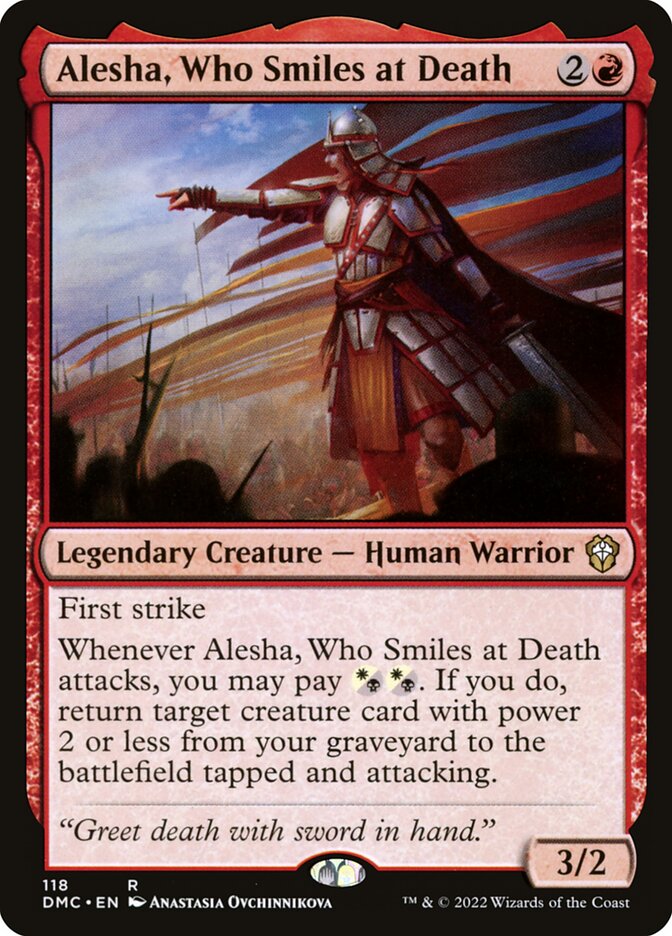 Alesha, Who Smiles at Death | Art by Anastasia Ovchinnikova | Dominaria United Commander
Niko Aris: They Defied Destiny
Niko Aris arrived in Kaldheim in 2021 as the first explicitly non-binary planeswalker in the game. Born on Theros, they were a decorated javelin thrower destined for heroic glory. The god of fate, Klothys, sent agents to enforce that destiny. Niko said no. That single act of refusal ignited their planeswalker spark and launched them across the multiverse.
The design team behind Niko included non-binary voices who built the character from the ground up. Concept artist Lake Hurwitz put it perfectly: Niko represents the power of making a choice to express yourself, rather than expressing the expectations others put on you. Their blue-white color identity fits them like a glove. Learning, discipline, and the refusal to accept inherited limits. Niko is not a side character. They are a planeswalker. They walk between worlds on their own terms.
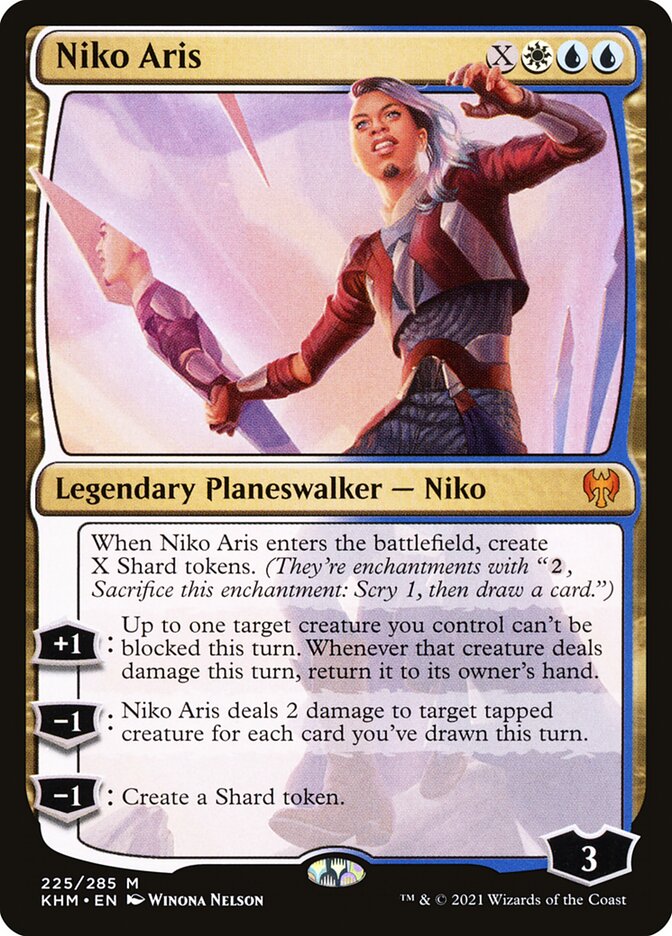 Niko Aris | Art by Winona Nelson | Kaldheim
Chandra Nalaar and Nissa Revane: The Long Road to Canon
Chandra Nalaar is one of the most iconic faces in Magic. The fiery, impulsive planeswalker from Kaladesh has been central to the story for over a decade. Her slow-burn romance with Nissa Revane, the reserved lesbian elf planeswalker who speaks to the soul of the land, developed across years of story content. Fans saw it building. The chemistry was undeniable. Then, in 2019, the novel War of the Spark: Forsaken erased it. Their relationship was rewritten as one-sided. The community protested loudly and rightly. Wizards issued a formal apology. Head Designer Mark Rosewater reaffirmed Chandra's pansexuality.
The payoff took four years, but it was worth the wait. In March of the Machine: Aftermath (2023), Chandra and Nissa kissed on the page. Canon. Final. Beautiful. It remains one of the most celebrated moments in recent Magic lore because it proved that community pressure works. When we demand better, companies can be held accountable. And when they course-correct, we get moments like this.
 Chandra, Torch of Defiance | Art by Kieran Yanner | Reality Fracture
Ral Zarek and Tomik Vrona: The Ravnica Husbands
Ral Zarek is the Izzet League's planeswalker representative. Brilliant, arrogant, and literally crackling with lightning. Tomik Vrona is an Orzhov property lawyer who later became guildmaster. Sharp, meticulous, and exactly the foil Ral needs. Their guilds are ancient rivals, so they kept their relationship private at first. Then they went public. Then they got married. The Pride Across the Multiverse Secret Lair card "Savor the Moment" depicts their wedding celebration in lush detail.
Here is the part that matters most. In a 2019 Forbes interview, Wizards designers confirmed that homophobia does not exist in any Magic: The Gathering world. Same-sex couples are normal, accepted, and unremarkable on every plane. That is not flavor text. That is a design philosophy. It means Ral and Tomik are not brave for loving each other. They are just husbands. And that is radical.
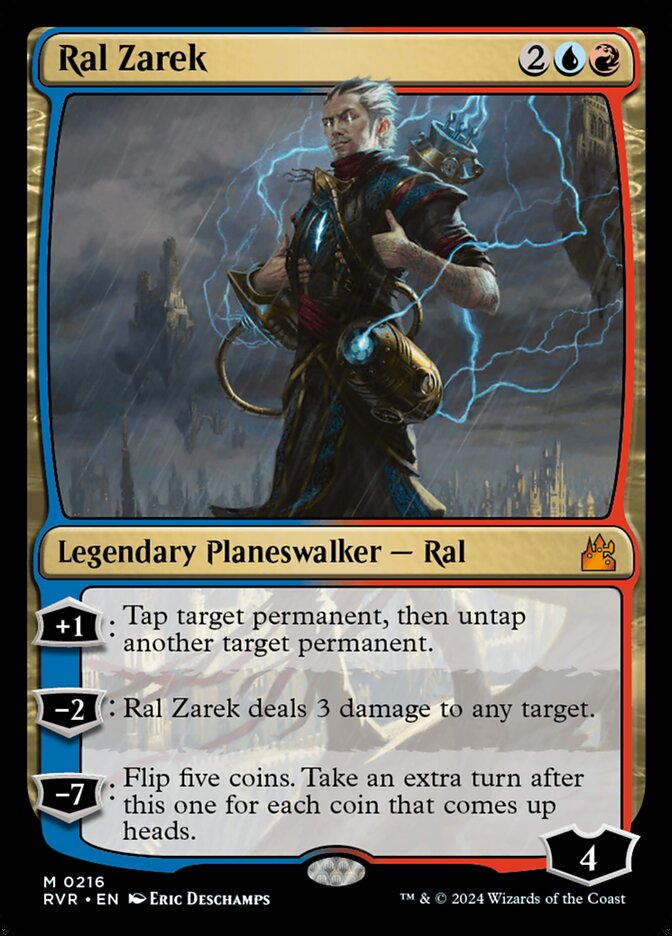 Ral Zarek | Art by Eric Deschamps | Ravnica Remastered
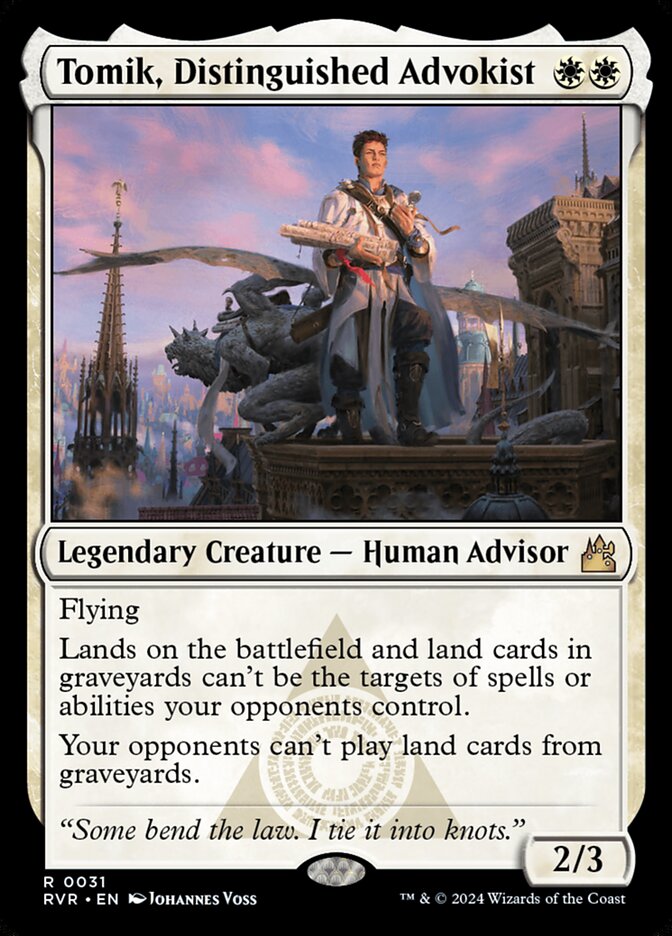 Tomik, Distinguished Advokist | Art by Johannes Voss | Ravnica Remastered
Saheeli Rai and Huatli: A Love Letter Across Planes
Saheeli Rai is a brilliant inventor and artificer from Kaladesh. Huatli is a warrior-poet from Ixalan who commands dinosaurs with spoken verse. Their romance was years in the making, conducted across the distance of entire planes. The payoff arrived in 2023 with the Lost Caverns of Ixalan story "Note for a Stranger," which is exactly what it sounds like. Saheeli writing to Huatli. It is gorgeous, tender, and unapologetically romantic. The Pride Across the Multiverse card "Heartbeat of Spring" by Peo Michie captures them in a quiet, intimate moment that feels earned because it was.
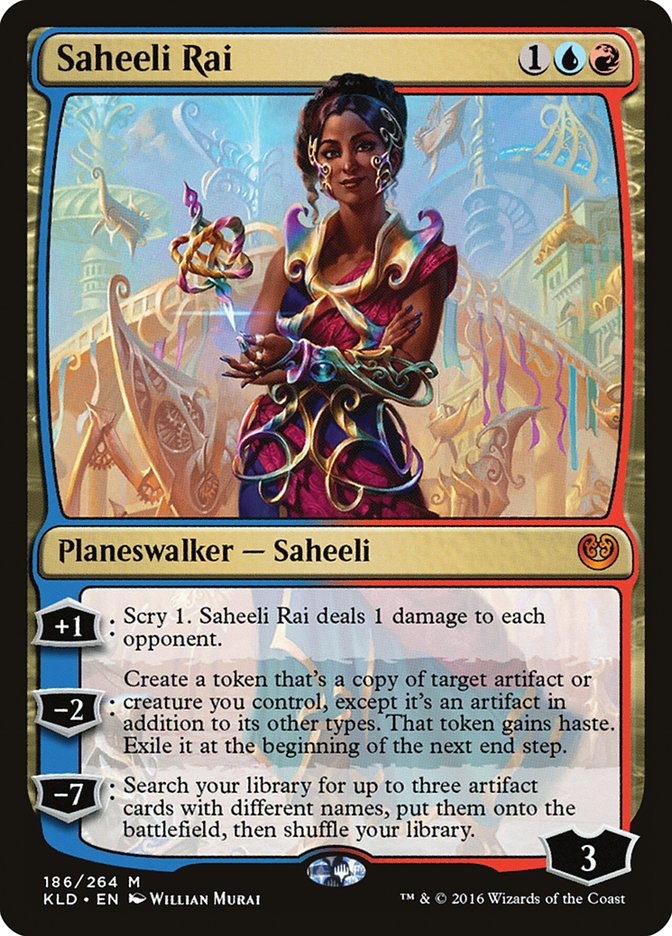 Saheeli Rai | Art by Willian Murai | Kaladesh
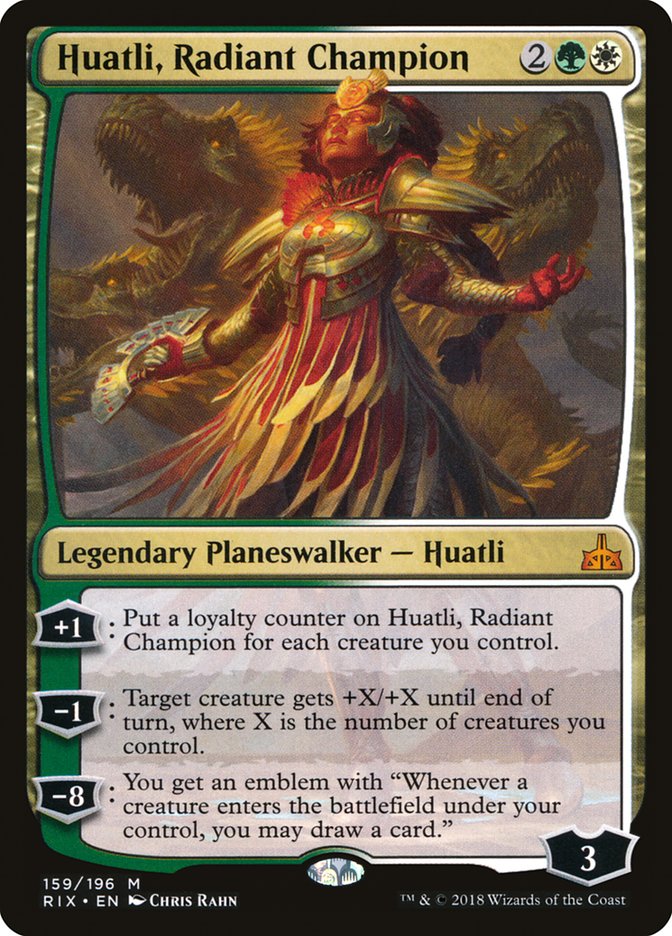 Huatli, Radiant Champion | Art by Chris Rahn | Rivals of Ixalan
Yuma, Proud Protector: The Frontier Guardian
In 2024, Magic added Yuma to the canon. A trans man from the frontier plane of Thunder Junction, Yuma protects the land and the communities who live on it. His card mechanic involves land sacrifice and regrowth, which thematically mirrors his nurturing, protective character. He is one of the few confirmed trans men in the game, and his presence matters. Transmasculine representation in fantasy is still rare. Yuma stands in the command zone with the same dignity as any other legend.
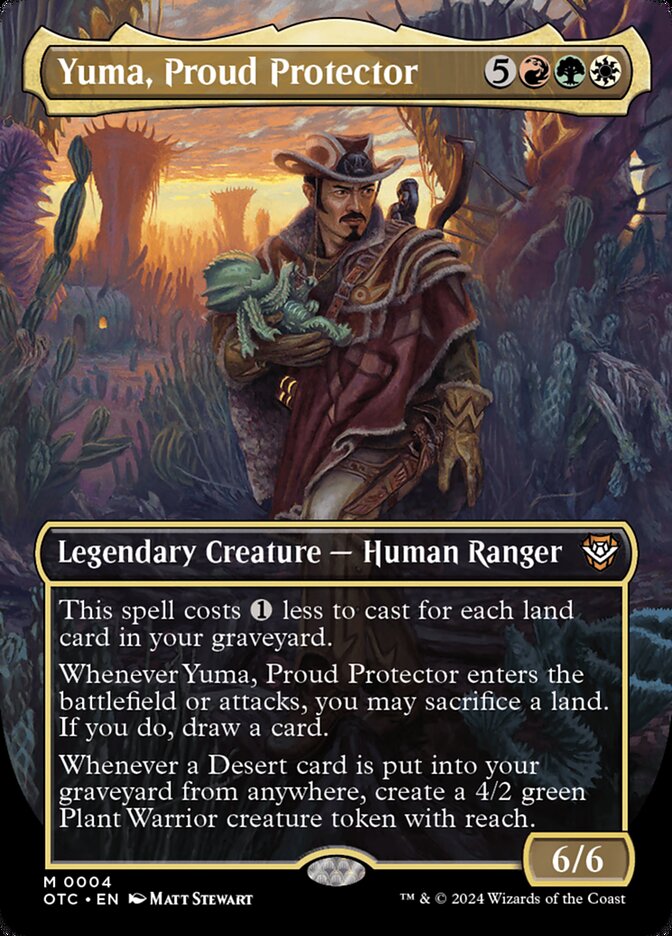 Yuma, Proud Protector | Art by Matt Stewart | Outlaws of Thunder Junction Commander
Jamira, Kequia Akosa, and Segante Guarneri: The 2026 Expansion
The Strixhaven: Omens of Chaos novel by Seanan McGuire, published in April 2026, quietly became one of the queerest prose entries in Magic history. Jamira, daughter of Planeswalker Angrath, and Kequia Akosa, granddaughter of Planeswalker Teferi, share a kiss at the novel's end. Both are from major planeswalker bloodlines. Both are confirmed queer. That is the kind of legacy representation that makes a universe feel lived-in.
Segante Guarneri also debuts in the same novel. A trans man from Fiora and a master of Essence studies, he joins Yuma as one of the few confirmed transmasculine characters in Magic canon. Romantic tension with the protagonist, Eula Blue, is hinted at throughout the book. The Gaming Trend review praised the novel's effortless integration of queer identity into its academic fantasy setting. No speeches. No coming-out trauma. Just students being students, and some of them happen to be queer.
The Rest of the Canon
Not every queer character gets a novel or a headline card. Some are quieter. Kynaios and Tiro of Meletis are the gay kings who founded the city of Meletis on Theros, inspired by real ancient Greek lovers. Their combined card in Commander 2016 reflects their partnership through shared abundance. Yahenni, Undying Partisan, is a non-binary aetherborn socialite and revolutionary from Kaladesh. As a species, aetherborn are non-binary; Yahenni specifically uses they/them pronouns and their story about living fully in borrowed time hits hard. Halana and Alena are lesbian ranger partners from Innistrad, confirmed in official lore and literally named as partners on their card. Oviya Pashiri, Sage Lifecrafter, mentions her late wife in Kaladesh lore. Ashiok, Nightmare Weaver, is intentionally androgynous with no pronouns used in any official content, though their villain status has drawn criticism for reinforcing tired tropes. The field has improved since, but Ashiok remains a complicated footnote.
Bearscape and the Body We Still Need to See
In 2002, Bearscape was a green enchantment from Odyssey that made bear tokens. The original art by Heather Hudson showed literal bears. Cute. Forgettable. Then the 2022 Pride Across the Multiverse Secret Lair happened. Artist Ricardo Bessa reimagined the card entirely. The new art shows hefty, hairy gay men relaxing together in a lush valley. The flavor text reads: "They built a refuge with their bear hands." It is a visual pun, a love letter to bear culture, and one of the most joyfully specific pieces of queer art in the game.
One figure in Bessa's art has visible top surgery scars. That detail is not accidental. It is trans-inclusive body-diverse representation tucked into a card about gay male community. It matters. But here is the honest truth. Bearscape remains the only body-diverse queer representation in Magic: The Gathering. Every named planeswalker, every story protagonist, every romantic lead fits a conventionally attractive body type. As TheGamer noted in their 2022 coverage, the card was embraced but some community response leaned into fetishistic "bara daddy" jokes rather than genuine celebration of diverse bodies. The gap is real. We have queer characters now. We do not yet have queer characters who look like the full range of our community. Bearscape deserves its flowers. It also deserves company.
The Artists Behind the Magic
The representation on these cards does not appear by accident. Queer artists put it there. Wizards of the Coast has made a deliberate practice of commissioning LGBTQIA2S artists to illustrate queer cards, and the results speak for themselves.
Winona Nelson painted Niko Aris for Kaldheim and Alesha for the Pride Across the Multiverse Secret Lair. Two of the most important queer cards in the game, both from the same hand. Jack Hughes, a vocal queer artist with work across Modern Horizons 3, Doctor Who, Murders at Karlov Manor, and Streets of New Capenna, has spoken publicly about the necessity of queer voices in game art. His quote from Gayming Magazine still resonates: queer voices come through in the game and its lore in vital ways.
The 2022 Pride Across the Multiverse Secret Lair was an all-queer artist lineup. Ricardo Bessa painted the reimagined Kaladesh Pride parade for Collective Voyage and the iconic Bearscape. Peo Michie captured Saheeli and Huatli in Heartbeat of Spring. Lauren YS reimagined Sol Ring. Jabari Weathers painted Mana Confluence. Merlin G.G. created Triumphant Reckoning. In 2026, Merlin G.G. returned to paint the foil Gilded Lotus promo for Magic Presents: Pride, depicting Chandra and Nissa in a tender, domestic moment that moves past the kiss into quiet intimacy. WotC's commitment was never just "make a pride card." It was "pay queer artists to make queer art." That is the difference between rainbow capitalism and actual community investment.
Justine Mara Andersen rounds out the roster as a publicly out queer artist with illustrations across multiple sets. Together, these artists have built a visual vocabulary for queerness in the multiverse that did not exist a decade ago.
At Your Commander Table
This is where the lore becomes personal. The Commander format matters for queer representation because your commander is not just a card. It is your avatar at the table. It is the general of your army, the face of your strategy, and the character you choose to represent you.
Alesha sits in more trans players' command zones than WotC probably predicted. Niko Aris gives non-binary players a planeswalker who literally defied fate to be themselves. Ral and Tomik, Saheeli and Huatli, Chandra and Nissa. These are not background characters. They are legends. They lead decks. They win games.
In June 2026, Wizards ran Magic Presents: Pride, an in-store Commander event with a genuinely delightful gimmick. Every deck had to be built around two commanders partnered together. WotC's own copy explicitly suggested pairing Ral with Tomik or Saheeli with Huatli. The event encouraged players to build their "Magic OTP." That is not subtle. That is WotC telling players to ship their favorite queer couples at the LGS. The promo card was a foil Gilded Lotus with art by Merlin G.G. showing Chandra and Nissa in a peaceful, affectionate moment. There was even an enamel pin. Wear it with pride.
Community spaces have grown alongside the canon. r/magicTCG and r/mtgvorthos host active, respectful discussions of LGBTQ representation. Queer MTG Discord servers organize games, share decklists, and celebrate new confirmations. When Chandra and Nissa finally kissed in 2023, the internet lost its mind in the best way. These moments matter because the table is real. It is your living room. Your local game store. Your kitchen. And it is more welcoming than it used to be. The best local game stores now run queer-specific nights where you do not have to manage anyone else's discomfort. You just get to play.
Beyond the Multiverse
A quick acknowledgment of scale. In June 2026, Wizards released the Marvel Super Heroes Universes Beyond set, bringing a wave of crossover cards into Magic's mechanical ecosystem. The set includes Wiccan and Hulkling as a married gay couple, a genderfluid and bisexual Loki, gay Iceman, and bisexual Hercules. White Widow reads as aroace to many fans, though Marvel's own canon is looser than WotC's native confirmations, so that reading lives in the "reads as" space rather than flat canon.
These characters are valid and exciting, but they are not Magic's own. They were not built for this multiverse. They were imported from another. The emotional core of this article stays with the characters WotC created from scratch. Alesha. Niko. Ral and Tomik. Saheeli and Huatli. Yuma. Jamira and Kequia. They are native to the planes we play on, and their stories belong to this game first.
What's Still Missing
The table is more welcoming than it has ever been. We are still pulling up chairs.
Most queer representation lives in supplemental products, Commander decks, and prose novels. If you only follow Standard-legal headline sets, you will miss a lot of this. The 2026 growth has been heavily weighted toward licensed prose and crossover IP rather than new native Planeswalkers who read as queer from their debut card. That is a real distinction. A novel confirmation is wonderful. A card in your booster pack is louder.
Non-binary characters still skew secondary or villain-adjacent. Niko is a hero, but Ashiok's prominence as a non-binary villain created a shadow that lingers. Trans characters often get one defining moment and then drift to the background. We want ongoing arcs, not single story beats.
Body diversity remains the most visible gap. Bearscape is the only card that celebrates queer bodies outside the conventionally attractive mold. There is no planeswalker who looks like that. No story hero. No named character in the lore. The community deserves to see itself fully, and that includes fat bodies, disabled bodies, and bodies that do not fit fantasy's typical mold.
Aromantic and asexual representation is effectively absent from Magic's native multiverse. The Marvel crossover offers a potential reading for White Widow, but Magic's own planes have no confirmed aro or ace character yet. That is a space where the lore can still grow.
Intersectionality also deserves more spotlight. While Saheeli and Huatli bring queer characters of color to the forefront, the overall cast of named queer planeswalkers and story leads still skews toward lighter skin tones and western-coded fantasy archetypes. Magic's multiverse draws from global mythologies. Its queer cast should reflect that same breadth.
The ask is not bitter. It is honest. We have come so far. We are allowed to want more.
Protect Your Cards Like You Protect the Community
If you are running Alesha, Niko, Ral and Tomik, or any of these legends as your Commander, they deserve a home worthy of them. Your deck is not just cardboard. It is a statement about who you are and what you value. The cards in your command zone represent you. Protect them like you protect the community that fought for them.
Our QueerCraft deck tomes are built for Commander decks you actually care about. The kind of deck that took hours to tune. The kind that represents you at the table. Every queer legend in your command zone deserves a tome as intentional as your deck-building. Browse the collection and give your cards the home they earned.
Magic has come a long way since 1993. The multiverse is bigger than it has ever been. More than fifty canonically LGBTQ characters now live in it. Queer artists paint the cards. A company has raised over a million dollars for queer youth. And a community keeps asking for more, which is exactly as it should be. For the full landscape of queer representation across tabletop gaming, visit our guide to queer representation in tabletop gaming. The cards are cast. The representation is real. And we are just getting started.